The gap between what’s actually happening in a mine right now and what management can see is one of the most persistent operational challenges in the industry. A haul truck breaks down at the dump site. Production stops for the affected route. The dispatch supervisor learns about it through radio call. The shift supervisor learns about it during shift briefing. Site management learns about it in daily production reports. Corporate management learns about it in weekly summaries.
Each delay in this information flow means decision-makers are working with outdated pictures of operational reality. Decisions made based on yesterday’s or last week’s data can’t respond to today’s actual conditions. The operational cost of this information lag accumulates across every decision that would have been made differently with better data.
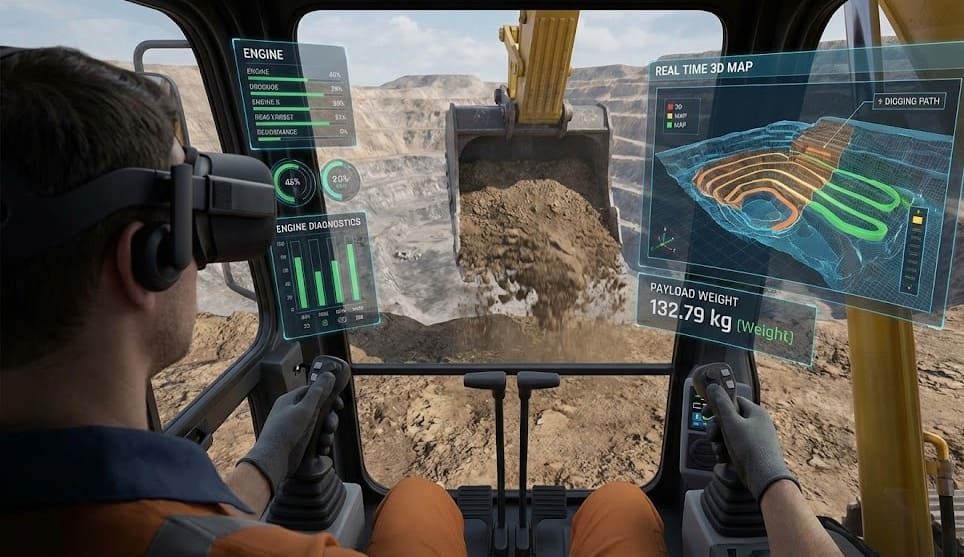
Digital twin technology with real-time monitoring capability closes this gap by making current operational conditions visible to decision-makers across all levels. Solutions like Virtu Smart Digital Twin Mining platform have been developed specifically to bring this visibility to Indonesian mining operations. Understanding what real-time visibility actually enables, and how mining operations use it in practice, matters for operators evaluating how to modernize their operational management.
What Real-Time Monitoring Actually Captures
Real-time monitoring in mining operations pulls together data from multiple sources that traditionally exist in separate systems.
Equipment location and status through GPS and telemetry. Every haul truck, excavator, dozer, and support vehicle reports position, speed, load status, and operational condition continuously. Fleet dispatch sees the whole operation rather than snapshots.
Production metrics from loading and dumping activities. Cycle times, tonnage moved, blend consistency — all tracked as operations happen rather than aggregated after the fact.
Environmental conditions from weather stations and air quality monitors. Rain intensity affects road conditions and equipment safety. Dust concentrations affect visibility and compliance. Temperature affects equipment performance. All become part of the operational picture.
Safety monitoring from various sensor networks. Slope stability measurements. Gas concentration in underground operations. Proximity detection between equipment. Personnel location tracking in high-risk areas.
Geological data from ongoing survey activities. Drone LiDAR updates. Blast fragmentation analysis. Ore grade assessments. Topographic changes from mining progress.
What Visibility Actually Enables
Having all this data available in real-time changes what mining operations can actually accomplish.
Immediate response to operational disruptions becomes possible. Equipment breakdowns get addressed faster because they’re visible immediately rather than reported through delayed channels. Route congestion gets resolved before it accumulates into major delays. Weather events trigger response before they impact operations severely.
Data-driven decision making replaces intuition-based management. Shift supervisors making dispatch decisions can see actual conditions rather than working from assumed patterns. Site management adjusting production plans work with current data rather than yesterday’s snapshots. Corporate management assessing operational performance sees genuine current state.
Coordination across operational functions improves substantially. Production, maintenance, safety, and geology teams all work from the same current data. Handoffs between functions happen based on shared reality rather than each function’s separate view of what’s happening.
Historical analysis becomes richer. Real-time data continues accumulating, creating detailed operational histories that support pattern analysis, incident investigation, and continuous improvement. Questions about why certain periods performed better or worse become answerable with actual data.
The Practical Limits
Real-time monitoring isn’t magic. Its value depends on several conditions being met.
Data quality determines output quality. Sensors need to be maintained and calibrated. Network infrastructure needs to be reliable. Data flow needs to be continuous rather than intermittent.
Human interpretation still matters. Dashboards displaying data don’t make decisions — people do. Training decision-makers to actually use available data effectively takes deliberate effort.
Alert fatigue becomes a real problem if not managed. Systems that flood operators with too many alerts get ignored. Meaningful alert thresholds require ongoing refinement based on operational experience.
The Change in Management Practice
Real-time monitoring changes not just what management can see but how management practice actually works.
Traditional daily production meetings that reviewed yesterday’s performance evolve toward real-time operational discussions responding to current conditions. Weekly management reports summarizing past performance evolve toward continuous management engagement with ongoing operations.
Decision-making cycles compress substantially. Decisions that previously required data collection, analysis, and reporting cycles happen in shorter time frames when current data is continuously available.
Where Virtu Fits
Virtu built its Smart Digital Twin Mining platform to enable real-time monitoring specifically for Indonesian mining operations. The platform integrates drone LiDAR surveying with continuous operational data flows, providing visualization tailored to mining decision-makers rather than generic industrial dashboards.
The visualization approach makes complex operational data accessible to mining professionals rather than requiring data analyst intermediaries. Site management, shift supervisors, and dispatch operators all work with the same underlying data through interfaces designed for their specific decision-making needs.