Featured

Jelajahi arsip berita kami. Temukan strategi, tips, dan tren terbaru untuk meningkatkan kehadiran online dan pertumbuhan bisnis Anda.

Bisnis, Featured, News

Live or Virtual Training? A Decision Framework for Defense Procurement

The procurement question that defense and security organizations actually face isn’t whether VR works. That’s been settled by a decade of deployment evidence across multiple national militaries and police forces. The real question is more specific and harder. Given a fixed training budget, a finite calendar, and operational outcomes that need to be reached — how should the mix between live and virtual training actually get set? Most decision tools in this space don’t help much. Vendor frameworks favor whoever made the framework. Generic comparison matrices treat all training categories equally when the actual procurement decisions are category-specific. Cost-benefit analyses run on assumptions that often don’t hold for the specific organization doing the procurement. This piece walks through a different approach. Three operational dimensions that determine training value. How VR and conventional training each score across those dimensions. A decision framework for combining them based on what the organization actually needs to accomplish. What “better training” actually means Before comparing methods, it helps to be specific about what training is supposed to produce. Vague goals produce vague procurement decisions. Operational goals produce evaluable ones. Training produces three things that matter operationally. First, personnel who can execute specific tasks reliably under operational conditions. Marksmanship that holds up at distance, under stress, with the right weapons. Procedural sequences that run correctly when cognitive load is high. Decision-making that lands within rules of engagement when the situation is ambiguous. Without these capabilities, the training didn’t deliver, regardless of what the syllabus says. Second, retention of capability across the gap between training and operations. Skills decay. The gap between when training happened and when capability is needed determines whether the skills survive. Annual refresher cycles aren’t enough for high-stakes capabilities. Daily practice isn’t operationally feasible. Something in between is what actually works, and the cost of running that “something in between” is what most procurement decisions actually turn on. Third, documented competency that satisfies accountability requirements. Modern defense and law enforcement training doesn’t just need to produce capability. It needs to produce evidence of capability — performance records, competency documentation, audit trails that survive review. Training that builds skills without producing documentation creates compliance risk regardless of how good the training was. A training method that scores well on these three dimensions is doing its job. A method that scores poorly on any one of them is failing operationally even if it scores well on the others. The comparison below evaluates VR and conventional training across these three dimensions, then synthesizes the trade-offs. Dimension 1: Capability production Conventional training produces capability that translates directly to operations. There’s no controversy about this. Decades of operational data confirm what every defense organization already knows — accredited live-fire programs, field exercises, and tactical drills produce personnel who perform competently in real operations. Anyone arguing otherwise isn’t worth taking seriously. The interesting question isn’t whether conventional training works. It’s whether conventional training produces the full capability range that operations actually require, given the constraints that limit how often the most realistic scenarios can be run. The answer is qualified. Conventional training is strongest where physical realism is essential — handling actual weapons, operating actual vehicles, executing actual physical maneuvers under actual environmental conditions. The skills built this way transfer directly because the training conditions match the operational conditions. No simulation reproduces this completely, and any honest assessment acknowledges the gap. VR is strongest where realistic conditions can’t be staged often enough. Decision-making under cognitive load. Procedural drilling at high frequency. Scenario variety beyond what physical facilities support. Pattern recognition across diverse threat configurations. Published research on weapons familiarization and tactical decision-making in immersive environments consistently reports positive transfer when scenario design is sound. The gap between VR training conditions and operational conditions is real, but it’s smaller than the gap between annual-refresh conventional training conditions and operational conditions when the operational task is decision-making rather than physical execution. This split is the operational reality. Tactile and field-condition capabilities favor conventional training. Procedural, decision-making, and pattern-recognition capabilities favor VR. The split isn’t aesthetic. It reflects what each method actually does well. Where most procurement decisions go wrong is treating capability production as a single category. Defense and security work involves many capability categories. Some favor conventional methods clearly. Others favor VR clearly. The procurement question is which capabilities the organization needs most, not which method is generally better. Dimension 2: Total cost of capability Cost analysis between training methods typically gets framed as a simple comparison of per-unit prices. That framing misses what actually matters operationally. The relevant question is cost per unit of capability produced, including all the costs and including the full operational time horizon. Conventional training has cost structure that scales with use. Ammunition consumed per session. Fuel burned per exercise. Vehicle wear per training cycle. Facility utilization per training event. Instructor hours per trainee. Personnel opportunity cost when operators get pulled from operations to instruct. Each of these scales as training volume scales, which means the total cost rises proportionally with training frequency and trainee count. VR has cost structure that concentrates at deployment, then runs cheap. Headsets, controllers, weapon-form props, motion platforms, and supporting infrastructure represent capital expenditure that gets paid once. Software licensing and content development add ongoing costs. Instructor time is still required, but at lower per-session ratios. The marginal cost of running an additional VR session after deployment approaches zero — software is licensed, instructor time is minimal, no consumables get burned. The breakeven math depends on organization size and training frequency. For organizations training small populations at low frequency, conventional methods are often cheaper in absolute terms because the VR hardware investment isn’t justified by the volume. For organizations training large populations at high frequency, or running multi-site operations, or wanting to refresh capabilities more often than annual cycles support, VR breakeven typically lands within one to three years. This is where the procurement decision usually turns. Not on whether VR is cheaper or more expensive in some abstract

Bisnis, Featured, News

Choosing the Right Digital Twin for Your Mining Operation

Most mining operators evaluating digital twin technology run into the same problem early. Vendors talk about digital twin as if it’s a single thing. It isn’t. The capabilities marketed under that label vary widely — from simple dashboard consolidation to fully integrated site-wide simulation platforms. Treating these as interchangeable leads to procurement decisions that miss the actual operational requirement, sometimes by significant margins. A useful way to think about this is through four categories: Analytics Twin, Asset Twin, Process Twin, and System Twin. Each addresses a different operational layer. Each has different deployment economics. Each suits different operations. This piece is a practical guide for mining operators selecting between them — not as an abstract framework but as a procurement decision tool. Why the four-type framework matters Before working through the categories, it helps to understand why this matters specifically for mining. Mining operations don’t fit neatly into the generic digital twin discourse. Most digital twin literature comes from manufacturing, smart cities, or building management contexts. The technical patterns transfer. The operational realities don’t. A mining operation is spatially huge, with terrain that changes daily as work advances. Equipment fleets are large and capital-intensive. Operations run continuously, often across multiple shifts and multiple sites under varying climatic conditions. Geological uncertainty is built into every operational decision. Safety risk is structural rather than incidental. Indonesian mining adds layers of regulatory framework through ESDM, sectoral oversight, and increasingly demanding ESG expectations. These characteristics affect digital twin selection in ways generic frameworks don’t capture. An operator buying a system designed for factory floor optimization, but applying it to an open-pit mine, will find significant gaps. An operator buying a building information modeling (BIM) platform and labeling it digital twin will find similar gaps, in different places. The four-type framework — Analytics, Asset, Process, System — is mining-aware. Each type addresses a specific operational layer that mining work involves. Knowing which type fits which problem is the foundation of sensible procurement. Type 1: Analytics Twin Analytics Twin is the lightest of the four. Most operators starting their digital twin journey land here first, often without realizing they’re already buying it. What it isA data aggregation and visualization layer. Pulls operational data from existing systems — equipment telematics, dispatch, ERP, CMMS, sensor networks — and consolidates them into unified dashboards. The “twin” element is data-state representation. The operation’s KPIs, current performance, and trend behavior are mirrored in a digital view, updated in near-real-time. The physical environment isn’t typically rendered in detail. What gets rendered is the data, organized for operational understanding. What it solvesData fragmentation. Most large mining operations have mature operational systems, but those systems live in silos. Production data here. Maintenance data there. Safety records somewhere else. Fuel consumption in another platform. Operational decisions that span functions require pulling reports from each system separately, integrating them manually, and producing the cross-functional view that management actually needs. Analytics Twin compresses this work. Cross-functional dashboards become a query, not a report-pulling exercise. Trend analysis flows naturally across data sources. Anomaly detection across multiple parameters becomes feasible. When to choose itOperations where the primary problem is fragmented data, not physical visualization. Sites with mature operational systems but weak integration. Management organizations that need consolidated views without committing to broader digital twin investment. Programs that need a quick-value first step to build organizational momentum. When it falls shortDoesn’t render physical assets or environments in spatial detail. Doesn’t simulate processes or run scenario analysis. Doesn’t replace operational control systems. The Analytics Twin sees the operation through its data. It doesn’t see the physical work itself. Investment profile Lowest of the four. Integration work concentrates on data pipelines. Visualization is dashboard-based or web-based. Deployment runs weeks to a few months. ROI is typically realized within the first year if the organizational change runs alongside the technical deployment. For most Indonesian mining operations starting their digital twin journey, this is the realistic first step. It produces operational value quickly and creates the data foundation that later twin types require. Type 2: Asset Twin Asset Twin moves beyond data into spatial representation of physical assets. Individual equipment, infrastructure, or specific operational zones become digitally mirrored. What it isA 3D digital representation of a physical asset, synchronized through sensor data with the actual asset. The twin reflects current operational state, location, parameters, and accumulated history. Common applications in mining include heavy equipment (haul trucks, excavators, dozers, drills), processing equipment (crushers, conveyors, mills, screens), and critical infrastructure (substations, fuel facilities, water systems, buildings). What it solvesAsset performance management at depth. Predictive maintenance moves from theoretical to operational when the asset twin can detect deviation from expected behavior patterns. Remote inspection becomes feasible for assets in hazardous or distant locations. Operator training acquires accurate digital representations of actual equipment before operators handle the real machines. Lifecycle tracking per asset enables better replace-or-rebuild decisions. For Indonesian mining operations with large fleets of high-value equipment, the Asset Twin layer is where predictive maintenance becomes operationally real. When to choose itOperations where equipment uptime, maintenance cost, or operator training is the dominant problem. Sites with sensor-rich assets where predictive maintenance produces measurable ROI. Operations transitioning from reactive to predictive maintenance models. Training programs that need accurate equipment representation for operator development. When it falls shortAsset Twins represent assets individually. They don’t show the operation as a whole. Twenty Asset Twins across twenty equipment types still don’t produce a unified operational view. Process coordination, site-wide optimization, and cross-functional simulation aren’t part of Asset Twin scope. Investment profileModerate. Requires accurate 3D modeling (built from CAD data, photogrammetry, or LIDAR scans), sensor integration for real-time synchronization, and analytics infrastructure. Asset selection matters significantly — high-value, sensor-instrumented, maintenance-critical assets justify the investment more readily than commodity equipment. For operations focused on specific asset performance, Asset Twins deliver direct ROI. They also serve as building blocks for the larger twin types that follow. Type 3: Process Twin Process Twin focuses on flow rather than assets. How work moves through the mining

Bisnis, Featured, News

5 Facts About Bandung Shoes and TXTURE’s Journey as Its Representation

In the world of local leather footwear, the term Bandung shoes carries a certain weight. It doesn’t simply refer to a geographical location, but rather to an entire ecosystem of the footwear industry that has been built over more than a century. Behind the glitter of this fashion city, there are hundreds of workshops and artisans quietly producing leather shoes with a quality that is even taken seriously in international boot forums. One of the names that most frequently comes up when people talk about premium Bandung shoes is TXTURE. The brand has been operating since 2009 and is widely known as one of the most consistent bootmakers in Indonesia. To paint a more complete picture, here are 5 facts about Bandung shoes and how TXTURE navigates them today. 1. Bandung Shoes: Not Just a Label, but an Ecosystem When someone mentions Bandung shoes, what they actually mean is not just one or two brands, but an entire ecosystem. Within it, there are handwelted artisans, leather suppliers, stitchers, finishers, even hardware suppliers providing brass fittings and eyelets. All of them are interconnected in small networks that have been forming since Cibaduyut first gained recognition as a shoe craft center around 1918. This ecosystem strength is something outsiders often fail to appreciate. A bootmaker in Bandung doesn’t need to look far to find an artisan capable of crafting neat welts, nor do they need to import leather from other cities. Almost every component needed can be accessed within a radius of just a few dozen kilometers. This kind of efficiency is what allows brands like TXTURE to maintain quality while still producing in small batches without being overwhelmed by costs. In simple terms, Bandung is like the Milan of Indonesian leather shoes. Not because of the glamour, but because the infrastructure is genuinely there. 2. TXTURE Grew from a Small Workshop, Not a Factory To understand TXTURE as part of Bandung shoes, it’s important to know that this brand wasn’t born out of a large factory or major investors. It all started in Joe Rahadiantara’s garage back in 2009, with a simple ambition: to prove that Indonesian artisans could produce boots comparable to international brands. In 2016, Annisa Amalina Tamimi joined the team, and two years later, she was entrusted with the role of CEO, while Joe focused on overseeing production. To this day, TXTURE continues to be run with a family-run approach. Most of its workers are Bandung-based artisans with long experience in leather craftsmanship, and production decisions are made without chasing volume. This approach is what gives the character of Bandung shoes from TXTURE its personal feel. Every pair of their boots is the result of real handwork involving real people, rather than machines churning out hundreds of pairs a day. From a collector’s perspective, that’s precisely where the value lies. 3. Handwelted and Goodyear Welt as Standard Techniques When discussing Bandung shoes at a serious level, one thing that almost always comes up is the use of handwelted and Goodyear welt techniques. These two methods were inherited from the European shoemaking tradition that entered Indonesia through the Dutch colonial era, and they remain standard among premium Bandung brands to this day. TXTURE applies both techniques consistently. Most of its boot products use Goodyear welt construction, while certain specific models like the Tanka Boots are built with full handwelted construction. The advantages of these techniques are well known: boots become more durable, can be resoled multiple times, and are structurally sturdier than ordinary cemented shoes. What not everyone realizes is that stitching a welt manually is heavy work. Artisans have to punch through thick leather using an awl, then stitch waxed thread gradually around the shoe. A single pair of boots can take hours just for this stage alone. That’s why welted handmade products from Bandung shoes are generally produced in limited quantities, including at TXTURE’s workshop. 4. Material Choices That Make TXTURE Stand Out One of the reasons TXTURE is often mentioned as one of the best representations of Bandung shoes is its choice of materials. They don’t rely solely on local leather, although Indonesian full-grain leather is also used and its quality is well recognized. Beyond that, TXTURE imports leather from tanneries whose names have become legendary among leather goods enthusiasts. Some of the materials TXTURE has used and continues to use include: Hardware details are never overlooked either. Solid brass is the material of choice for eyelets, D-rings, and hooks, since it holds up better in Bandung’s humid tropical climate. Lambskin memory foam padding and ortholite-lined footbeds in several models also provide comfort that is fairly on par with international boots. 5. Bandung Shoes’ Position on the Global Boot Map Over the past nearly two decades, premium Bandung shoes have steadily entered the radar of the international boot community. On forums like Reddit’s r/goodyearwelt, Styleforum, and even the secondhand marketplace Grailed, names of Bandung-based bootmakers appear alongside well-established American and Japanese brands. TXTURE is one of the names that comes up fairly often in these discussions. According to a Stridewise review published in 2026, Indonesian boots are generally priced at around half the cost of American boots with comparable specifications. One Grailed reviewer even openly compared the Warhorse Service Boot from TXTURE to Truman Boot Co., concluding that the construction quality was “phenomenal.” A position like this, of course, wasn’t built overnight. It was shaped gradually by many Bandung shoes brands over the years, and TXTURE has been one of the consistent contributors to that journey. From a buyer’s perspective, this means one simple thing: buying a pair of TXTURE isn’t just about owning boots, but also becoming part of the long story of Bandung shoes on the global industry map. Closing Thoughts: Bandung Shoes Today To this day, Bandung remains home to many leather shoe brands with different characters. Some focus on the casual segment, others play in the formal shoe category, and there are also those who are serious about handmade boot lines

Bisnis, Featured, News

From Chaos to Control: Digital Twin in the Modern Mine

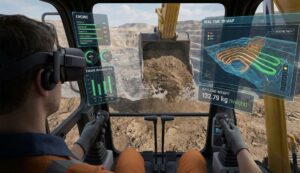
Mining has always been one of the world’s most demanding industries. The worksite shifts constantly — trucks move around the clock, terrain changes by the hour, and the margin for error is razor thin. In an environment where every second counts, the ability to make fast, informed decisions isn’t just a competitive advantage. It’s survival. That’s exactly why Digital Twin technology is gaining serious traction across the global mining sector. What Is a Digital Twin, Really? A Digital Twin is a live virtual replica of a real-world system, object, or process. Unlike a static 3D model, it actively mirrors what’s happening on the ground using real-time data and simulations. It tracks history, reflects current conditions, and helps operators monitor, analyze, and predict performance — all from a centralized command center. In mining, this translates to something remarkable: full situational awareness across an entire operation, without setting foot on the site. Turning Complexity Into Clarity Picture a large open-pit mine. Dozens of haul trucks moving simultaneously, roads shifting as excavation progresses, safety zones changing by the shift. Managing this manually — or even through flat satellite imagery — leaves enormous gaps in understanding. A Digital Twin changes the picture entirely. A 3D topographic view gives supervisors an intuitive, actionable overview of the entire site. Truck movement patterns become visible at a glance. Road speed data can be color-coded — green for safe, yellow for caution, red for danger — giving command teams instant awareness of where intervention is needed. This isn’t just about convenience. It’s about unlocking a fundamentally better way to run operations. The Numbers Speak for Themselves Companies that have implemented Digital Twin solutions have reported significant results. According to research by Hexagon, teams saw a 49% increase in productivity and a 46% reduction in operational risks. PwC’s research on manufacturing applications found a 50% reduction in unplanned outages — a critical metric in mining where equipment downtime has a direct, measurable impact on revenue. Faster decisions. Fewer surprises. Lower costs. Built for the Pace of Mining What makes Digital Twin particularly powerful in mining is its ability to keep up with the industry’s pace. When the landscape is changing in real time, you need intelligence that updates in real time. Historical playback and auditing features allow teams to review what happened, when it happened, and why — making it easier to learn from incidents and prevent recurrence. Predictive maintenance capabilities mean that equipment problems can be spotted before they cause costly shutdowns. Instead of reacting to failures, teams can plan ahead, schedule maintenance during low-impact windows, and keep operations running at peak efficiency. The Competitive Edge That Mining Needs The mining industry is mature and highly competitive. Margins are tight, regulations are strict, and the pressure to optimize never lets up. Digital Twin technology offers something that has historically been hard to achieve in mining: clarity in the middle of complexity. For companies ready to move beyond guesswork and gut feeling, this technology isn’t a luxury — it’s a strategic necessity.

Bisnis, Featured, News

Why Virtual Training for Military and Law Enforcement Is No Longer Optional

There’s a shift happening in defense organizations across Southeast Asia — and it’s not subtle. Commanders who once relied solely on live-fire exercises and field drills are quietly making room in their training budgets for something new. Something that, just a decade ago, would have sounded like science fiction. Virtual training for military and law enforcement has crossed the threshold from “experimental” to “essential,” and the organizations moving fastest are already pulling ahead. But why now? What changed? The honest answer is: everything changed at once. The Old Way Has Real Limits Traditional combat training has served defense forces for generations. Nobody’s disputing that. But anyone who has actually organized a live-fire exercise knows what it costs — in money, logistics, time, and occasionally, in injuries. Ammunition is expensive. Coordinating large-scale field exercises requires weeks of planning. Certain scenarios — hostage extractions in dense urban environments, VVIP protection under active threat — simply cannot be safely replicated in real-world training. You can approximate them. You can brief soldiers on what to do. But you can’t truly put them inside the pressure of the moment without either spending an enormous amount of resources or accepting real risk. This is the gap that virtual training for military and law enforcement was built to fill. What KOMINA Actually Brings to the Table KOMINA, developed by PT Virtu Digital Kusuma and accessible at https://komina.co/, is not a simulator in the old-fashioned sense. It’s not a screen on a stand with a joystick. It’s a full-immersion VR training platform designed from the ground up for defense and security professionals. The difference matters. A lot. When a trainee steps into a KOMINA session, they’re wearing a haptic vest with over 40 impact zones, carrying a weapon replica that mimics the actual weight distribution and recoil of a real firearm, and moving through a photorealistic environment rendered at 4K per eye with a 120Hz refresh rate. Their heart rate is being monitored in real time. Their stress responses are being analyzed by AI. Every shot, every movement, every decision is captured. When the session ends, there’s data. Not a vague impression from an instructor who was watching from thirty meters away. Actual data — shot groupings, reaction times, stress curves, tactical positioning, communication efficiency. That’s what makes this different. The Numbers Don’t Lie Organizations that have deployed KOMINA across their training programs report up to 60% reduction in training costs. That’s not a rounding error — that’s a structural change in what it takes to prepare personnel for high-stakes situations. More than 10,000 personnel have been trained through the platform. More than 50 military units have gone through it. The satisfaction rate sits at 95%. These aren’t marketing projections. They’re outcomes. Why This Matters Beyond the Budget Cost savings are compelling, obviously. But the deeper argument for virtual training for military and law enforcement isn’t about money — it’s about outcomes that live fire simply can’t replicate. Consider stress inoculation. Studies in military psychology have consistently shown that personnel who have experienced controlled, realistic stress during training perform better under actual operational pressure. The body’s physiological response to danger — elevated heart rate, tunnel vision, degraded fine motor control — can be trained against. But only if the training environment actually triggers those responses. KOMINA’s Electric Shock Penalty system is designed specifically for this. Controlled electrical stimulation delivers genuine physical feedback when a trainee is “hit” during a scenario. It triggers real adrenaline. Real stress. And therefore real adaptation. You can’t get that from a PowerPoint briefing. Looking Forward The trajectory is clear. Virtual training for military and law enforcement will not replace traditional field exercises entirely — nor should it. But for scenario rehearsal, stress inoculation, performance analysis, and accessible repetition of complex tactical situations, VR platforms like KOMINA represent the most significant leap in training capability in a generation. The organizations that recognize this early will field more capable, more confident, better-prepared personnel than those still waiting for the technology to “mature.” It already has. To learn more about how KOMINA can transform your training program, visit https://komina.co/

Bisnis, Featured, News

VGLANT VR Fire Training: 5 Client-Driven Improvements

In technology development, there is often a gap between what developers think is cool, and what users actually need in the field. Over the last year, the Vglant technical team spent hundreds of hours sitting down with HSE Managers, firefighters, and corporate trainers. We listened to their frustrations with generic VR simulators on the market: “The smoke doesn’t feel real,” or “Setting up the controllers takes too long.” We took notes. We went back to the drawing board. The result is an evolution. Here are 5 specific updates to the Vglant Fire Safety module driven directly by your requests. 1. Volumetric Smoke Physics (Deleting the “Gray Fog”) Client Feedback: “In the old simulator, the smoke was just a transparent gray screen. My trainees could walk upright through it without fear. That teaches bad habits.” The Vglant Update: We re-engineered our particle engine. The smoke in Vglant is now Volumetric and Layered. Smoke accumulates at the ceiling (ceiling jet), banks down slowly, and darkens realistically. If the trainee does not physically crouch (duck and crawl) below the thermal layer, their visibility drops to zero. This forces the correct survival instinct, rather than just relying on verbal instructions. 2. Realistic Agent Duration Client Feedback: “Trainees are spraying the fire for 2 minutes straight. In the real world, a 3kg extinguisher runs out in 12 seconds. This gives them a false sense of security.” The Vglant Update: We introduced Resource Management. The virtual extinguisher tank now has physics-accurate capacity (based on weight and type). If a trainee wastes the spray by feathering the handle or aiming aimlessly, the tank will empty before the fire is out. This teaches the efficiency and urgency of the P.A.S.S. technique (Pull, Aim, Squeeze, Sweep). 3. “Zero-Friction” Mode (Kiosk Mode) Client Feedback: “I need 10 minutes just to explain how to use the controllers to a 50-year-old warehouse worker. We are running out of training time.” The Vglant Update: We simplified the UX into Kiosk Mode. No complex login menus. No long calibration. The trainee puts on the headset, and within 5 seconds, they are standing in front of the fire. We also simplified controller interaction: one button to grab, one button to spray. The focus of the drill is fighting the fire, not learning how to play a video game. 4. Adaptive Fire Behavior (Not Just a Loop) Client Feedback: “The fire always shrinks the same way, no matter where I spray it.” The Vglant Update: We embedded a Fluid Dynamics Algorithm. The virtual fire now reacts to the Impact Point of the extinguishing agent. 5. Post-Action “Heatmap” Telemetry Client Feedback: “I know they failed to put out the fire, but I don’t know WHY. Did they aim wrong? Or were they too close?” The Vglant Update: We overhauled the results screen. Instead of just “FAIL,” we display an Aim Heatmap. Instructors can visualize the trainee’s spray trail. “See this red graph? You spent 80% of the tank spraying the wall above the fire, not the source.” This visual data makes the debriefing session objective and educational. Conclusion: Technology that Listens  Vglant doesn’t build simulators for tech expos; we build them to save your assets and lives. Every line of code we write aims to close the gap between simulation and reality. Thank you for challenging us to be better. This is the result. Contact Us Experience the DifferenceDon’t settle for static simulators. Contact the Vglant team to schedule a demo of these latest updates at your facility. Call / WhatsApp: +62 812 9696 7887Email:  [email protected]: www.vglant.com

Bisnis, Featured, News

Crafted to Last: Original Leather Boots for Men by Txture Boots

Choosing the right boots is more than a style decision—it’s a commitment to quality, comfort, and confidence. TXTURE Boots are designed for men who appreciate original craftsmanship and footwear that stands the test of time. Every pair of txtureboots reflects a balance of strength, comfort, and refined everyday style. Handcrafted using carefully selected materials, TXTURE creates boots that are meant to be worn daily without losing their character. Original Leather with Lasting Character At the core of TXTURE Boots is premium original leather. This material is chosen not only for its durability but also for its ability to age beautifully. Over time, the leather develops a natural patina that enhances the character of the boots, making each pair uniquely yours. Unlike synthetic alternatives, the leather used in txtureboots remains breathable, flexible, and resilient—ideal for men who expect long-term performance from their footwear. Handcrafted for Everyday Comfort Durability means little without comfort. That’s why TXTURE designs its boots with everyday wear in mind. Cushioned insoles, balanced weight distribution, and supportive outsoles ensure that your feet remain comfortable throughout the day. Whether you’re heading to work, commuting through the city, or enjoying a casual weekend, txtureboots provide consistent comfort without compromising structure or style. Timeless Design That Fits Any Lifestyle Modern men need footwear that adapts to multiple settings. TXTURE Boots feature a clean and timeless design that pairs effortlessly with jeans, chinos, or smart casual outfits. These boots are not built around short-lived trends. Instead, TXTURE focuses on classic silhouettes and neutral tones, allowing txtureboots to remain relevant season after season. Why Choose TXTURE Boots With countless options available, TXTURE stands out through its dedication to craftsmanship and functionality. Key reasons to choose txtureboots include: Each pair of boots represents TXTURE’s commitment to quality and attention to detail. A Smart Investment in Everyday Footwear Investing in TXTURE Boots means choosing footwear that supports your lifestyle while enhancing your personal style. These boots are designed to reduce the need for frequent replacements, making them a practical and stylish long-term choice. When you wear txtureboots, you’re not just wearing boots—you’re wearing confidence, craftsmanship, and reliability. Shop Authentic TXTURE Boots Online For original products and the full TXTURE experience, visit the official website: https://txtureboots.com Purchasing directly from the official store ensures you receive authentic TXTURE Boots made with original materials and trusted craftsmanship. Conclusion TXTURE Boots redefine what everyday leather boots should be—durable, comfortable, and timeless. Crafted to last and designed for modern men, txtureboots offer the perfect balance between functionality and style. Upgrade your footwear collection today with TXTURE and experience the difference of original leather boots made to last.

Bisnis, Featured, News

Sewa Genset Harian dan Bulanan di Bali: Fleksibel untuk Segala Kebutuhan

Sebagai salah satu pusat pariwisata dan pembangunan di Indonesia, Bali memiliki kebutuhan listrik yang sangat dinamis. Tidak semua kebutuhan listrik bersifat sementara atau hanya berlangsung satu hari. Banyak sektor membutuhkan pasokan daya yang stabil dalam jangka waktu lebih panjang, mulai dari proyek konstruksi, hotel dan villa, hingga fasilitas industri dan komersial. Untuk menjawab kebutuhan tersebut, Swadaya Nusantara menghadirkan layanan sewa genset harian dan bulanan di Bali yang fleksibel, efisien, dan didukung unit genset berkualitas tinggi. Layanan ini dirancang agar dapat disesuaikan dengan durasi, kapasitas, serta jenis kegiatan yang membutuhkan pasokan listrik cadangan maupun utama. Perbedaan Sewa Genset Harian dan Bulanan Memahami perbedaan antara sewa genset harian dan bulanan sangat penting agar Anda dapat memilih layanan yang paling sesuai dengan kebutuhan. Sewa genset harian umumnya digunakan untuk kebutuhan listrik jangka pendek, seperti: Sementara itu, sewa genset bulanan di Bali lebih cocok untuk kebutuhan jangka panjang, seperti: Dengan pilihan durasi yang fleksibel, pelanggan dapat menyesuaikan biaya sewa tanpa harus berinvestasi membeli genset sendiri. Keunggulan Sewa Genset Harian untuk Kebutuhan Event Layanan sewa genset harian Bali menjadi solusi praktis bagi event yang membutuhkan listrik hanya dalam waktu terbatas. Swadaya Nusantara menyediakan genset silent yang tidak mengganggu kenyamanan tamu dan suasana acara. Beberapa keunggulan sewa genset harian antara lain: Layanan ini sangat ideal untuk event outdoor yang tidak memiliki akses listrik permanen atau membutuhkan daya tambahan. Sewa Genset Bulanan untuk Proyek dan Industri Untuk proyek konstruksi dan industri, kestabilan listrik adalah faktor utama dalam menjaga kelancaran operasional. Gangguan listrik dapat menyebabkan keterlambatan pekerjaan, kerusakan peralatan, dan kerugian finansial. Dengan sewa genset bulanan di Bali, Swadaya Nusantara memastikan pasokan listrik tetap stabil selama masa proyek berlangsung. Seluruh unit genset dirawat secara rutin dan siap digunakan dalam kondisi optimal. Keunggulan sewa genset bulanan meliputi: Layanan ini menjadi pilihan ideal bagi perusahaan yang membutuhkan listrik tanpa gangguan dalam waktu lama. Pilihan Kapasitas Genset Lengkap dan Fleksibel Swadaya Nusantara menyediakan genset dengan kapasitas beragam, mulai dari 20 KVA hingga 2000 KVA, yang dapat disesuaikan dengan kebutuhan spesifik pelanggan. Jenis genset yang tersedia meliputi: Semua genset tersedia dalam tipe silent, sehingga cocok digunakan di area pemukiman, kawasan wisata, dan lokasi dengan standar kebisingan tertentu. Dukungan Teknisi Profesional dan Layanan Terintegrasi Sebagai penyedia jasa rental genset Bali yang berpengalaman lebih dari 10 tahun, Swadaya Nusantara tidak hanya menyewakan unit genset, tetapi juga memberikan layanan terintegrasi. Setiap penyewaan genset dilengkapi dengan: Dengan dukungan teknisi profesional, pelanggan dapat menjalankan aktivitas tanpa khawatir terhadap masalah kelistrikan. Efisiensi Biaya dan Keamanan Operasional Menyewa genset jauh lebih efisien dibandingkan membeli unit sendiri, terutama untuk kebutuhan temporer atau proyek tertentu. Biaya pembelian, perawatan, dan penyimpanan genset dapat dialihkan dengan memilih layanan rental. Selain efisiensi biaya, keamanan operasional juga menjadi prioritas. Seluruh genset Swadaya Nusantara telah melalui proses pengecekan dan perawatan rutin untuk memastikan performa dan keselamatan penggunaan. Solusi Listrik Lengkap untuk Berbagai Sektor Layanan sewa genset harian dan bulanan di Bali dari Swadaya Nusantara telah digunakan oleh berbagai sektor, antara lain: Fleksibilitas layanan menjadikan Swadaya Nusantara sebagai partner terpercaya untuk kebutuhan listrik jangka pendek maupun jangka panjang. Untuk gambaran lebih lengkap mengenai layanan utama, Anda dapat membaca artikel berikut:➡️ Jasa Sewa Genset Penajam Terlengkap untuk Segala Kegiatanhttps://swadayanusantara.com/news-events/jasa-sewa-genset-penajam-terlengkap-untuk-segala-kegiatan.html Kesimpulan Baik untuk kebutuhan event satu hari maupun proyek jangka panjang, layanan sewa genset harian dan bulanan di Bali dari Swadaya Nusantara menawarkan solusi yang fleksibel, efisien, dan andal. Dengan dukungan genset berkualitas, teknisi profesional, serta harga yang kompetitif, Swadaya Nusantara siap menjadi mitra terbaik untuk kebutuhan listrik Anda. Website: https://swadayanusantara.com Alamat:Jalan Dato Tonggara No. 23A Rt 11 Rw 10Kramat Jati, Jakarta Timur Telepon: +62 (021) 22804345WhatsApp: +62 817812158

Scroll to Top