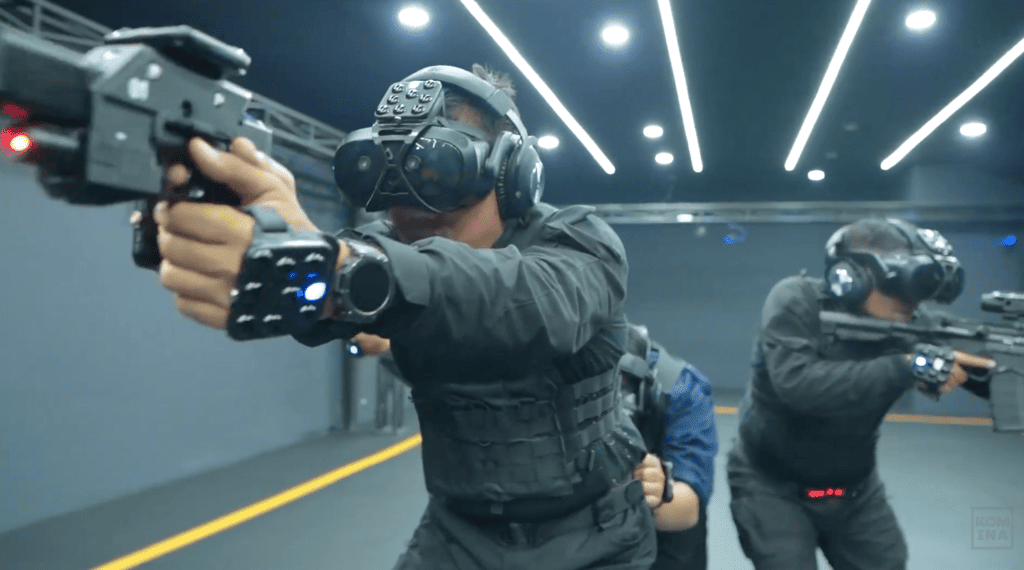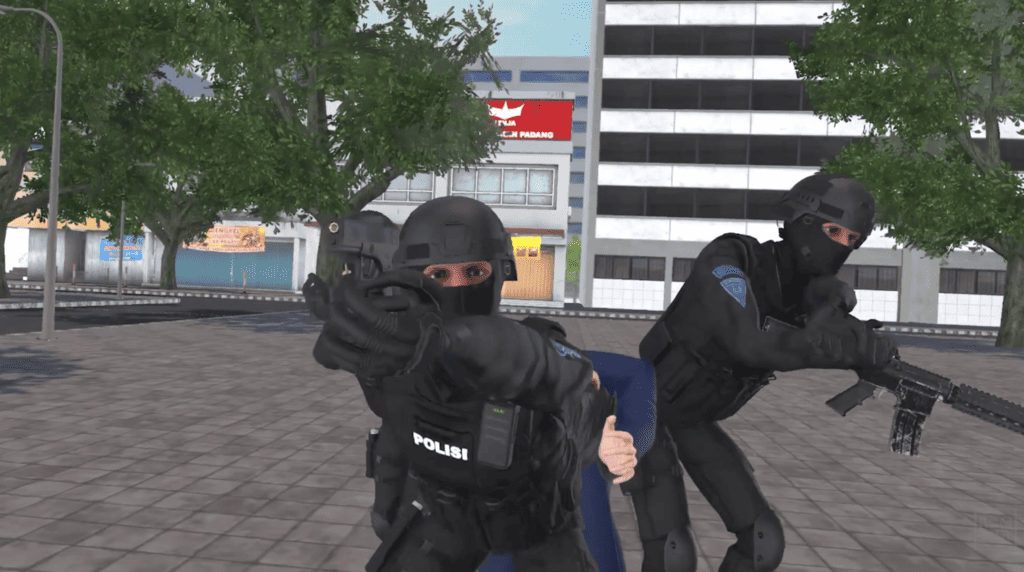
Live or Virtual Training? A Decision Framework for Defense Procurement
The procurement question that defense and security organizations actually face isn’t whether VR works. That’s been settled by a decade of deployment evidence across multiple national militaries and police forces. The real question is more specific and harder. Given a fixed training budget, a finite calendar, and operational outcomes that need to be reached — how should the mix between live and virtual training actually get set? Most decision tools in this space don’t help much. Vendor frameworks favor whoever made the framework. Generic comparison matrices treat all training categories equally when the actual procurement decisions are category-specific. Cost-benefit analyses run on assumptions that often don’t hold for the specific organization doing the procurement. This piece walks through a different approach. Three operational dimensions that determine training value. How VR and conventional training each score across those dimensions. A decision framework for combining them based on what the organization actually needs to accomplish. What “better training” actually means Before comparing methods, it helps to be specific about what training is supposed to produce. Vague goals produce vague procurement decisions. Operational goals produce evaluable ones. Training produces three things that matter operationally. First, personnel who can execute specific tasks reliably under operational conditions. Marksmanship that holds up at distance, under stress, with the right weapons. Procedural sequences that run correctly when cognitive load is high. Decision-making that lands within rules of engagement when the situation is ambiguous. Without these capabilities, the training didn’t deliver, regardless of what the syllabus says. Second, retention of capability across the gap between training and operations. Skills decay. The gap between when training happened and when capability is needed determines whether the skills survive. Annual refresher cycles aren’t enough for high-stakes capabilities. Daily practice isn’t operationally feasible. Something in between is what actually works, and the cost of running that “something in between” is what most procurement decisions actually turn on. Third, documented competency that satisfies accountability requirements. Modern defense and law enforcement training doesn’t just need to produce capability. It needs to produce evidence of capability — performance records, competency documentation, audit trails that survive review. Training that builds skills without producing documentation creates compliance risk regardless of how good the training was. A training method that scores well on these three dimensions is doing its job. A method that scores poorly on any one of them is failing operationally even if it scores well on the others. The comparison below evaluates VR and conventional training across these three dimensions, then synthesizes the trade-offs. Dimension 1: Capability production Conventional training produces capability that translates directly to operations. There’s no controversy about this. Decades of operational data confirm what every defense organization already knows — accredited live-fire programs, field exercises, and tactical drills produce personnel who perform competently in real operations. Anyone arguing otherwise isn’t worth taking seriously. The interesting question isn’t whether conventional training works. It’s whether conventional training produces the full capability range that operations actually require, given the constraints that limit how often the most realistic scenarios can be run. The answer is qualified. Conventional training is strongest where physical realism is essential — handling actual weapons, operating actual vehicles, executing actual physical maneuvers under actual environmental conditions. The skills built this way transfer directly because the training conditions match the operational conditions. No simulation reproduces this completely, and any honest assessment acknowledges the gap. VR is strongest where realistic conditions can’t be staged often enough. Decision-making under cognitive load. Procedural drilling at high frequency. Scenario variety beyond what physical facilities support. Pattern recognition across diverse threat configurations. Published research on weapons familiarization and tactical decision-making in immersive environments consistently reports positive transfer when scenario design is sound. The gap between VR training conditions and operational conditions is real, but it’s smaller than the gap between annual-refresh conventional training conditions and operational conditions when the operational task is decision-making rather than physical execution. This split is the operational reality. Tactile and field-condition capabilities favor conventional training. Procedural, decision-making, and pattern-recognition capabilities favor VR. The split isn’t aesthetic. It reflects what each method actually does well. Where most procurement decisions go wrong is treating capability production as a single category. Defense and security work involves many capability categories. Some favor conventional methods clearly. Others favor VR clearly. The procurement question is which capabilities the organization needs most, not which method is generally better. Dimension 2: Total cost of capability Cost analysis between training methods typically gets framed as a simple comparison of per-unit prices. That framing misses what actually matters operationally. The relevant question is cost per unit of capability produced, including all the costs and including the full operational time horizon. Conventional training has cost structure that scales with use. Ammunition consumed per session. Fuel burned per exercise. Vehicle wear per training cycle. Facility utilization per training event. Instructor hours per trainee. Personnel opportunity cost when operators get pulled from operations to instruct. Each of these scales as training volume scales, which means the total cost rises proportionally with training frequency and trainee count. VR has cost structure that concentrates at deployment, then runs cheap. Headsets, controllers, weapon-form props, motion platforms, and supporting infrastructure represent capital expenditure that gets paid once. Software licensing and content development add ongoing costs. Instructor time is still required, but at lower per-session ratios. The marginal cost of running an additional VR session after deployment approaches zero — software is licensed, instructor time is minimal, no consumables get burned. The breakeven math depends on organization size and training frequency. For organizations training small populations at low frequency, conventional methods are often cheaper in absolute terms because the VR hardware investment isn’t justified by the volume. For organizations training large populations at high frequency, or running multi-site operations, or wanting to refresh capabilities more often than annual cycles support, VR breakeven typically lands within one to three years. This is where the procurement decision usually turns. Not on whether VR is cheaper or more expensive in some abstract