

The procurement question that defense and security organizations actually face isn’t whether VR works. That’s been settled by a decade of deployment evidence across multiple national militaries and police forces. The real question is more specific and harder. Given a fixed training budget, a finite calendar, and operational outcomes that need to be reached — how should the mix between live and virtual training actually get set?
Most decision tools in this space don’t help much. Vendor frameworks favor whoever made the framework. Generic comparison matrices treat all training categories equally when the actual procurement decisions are category-specific. Cost-benefit analyses run on assumptions that often don’t hold for the specific organization doing the procurement.
This piece walks through a different approach. Three operational dimensions that determine training value. How VR and conventional training each score across those dimensions. A decision framework for combining them based on what the organization actually needs to accomplish.

What “better training” actually means
Before comparing methods, it helps to be specific about what training is supposed to produce. Vague goals produce vague procurement decisions. Operational goals produce evaluable ones.
Training produces three things that matter operationally. First, personnel who can execute specific tasks reliably under operational conditions. Marksmanship that holds up at distance, under stress, with the right weapons. Procedural sequences that run correctly when cognitive load is high. Decision-making that lands within rules of engagement when the situation is ambiguous. Without these capabilities, the training didn’t deliver, regardless of what the syllabus says.
Second, retention of capability across the gap between training and operations. Skills decay. The gap between when training happened and when capability is needed determines whether the skills survive. Annual refresher cycles aren’t enough for high-stakes capabilities. Daily practice isn’t operationally feasible. Something in between is what actually works, and the cost of running that “something in between” is what most procurement decisions actually turn on.
Third, documented competency that satisfies accountability requirements. Modern defense and law enforcement training doesn’t just need to produce capability. It needs to produce evidence of capability — performance records, competency documentation, audit trails that survive review. Training that builds skills without producing documentation creates compliance risk regardless of how good the training was.
A training method that scores well on these three dimensions is doing its job. A method that scores poorly on any one of them is failing operationally even if it scores well on the others. The comparison below evaluates VR and conventional training across these three dimensions, then synthesizes the trade-offs.
Dimension 1: Capability production
Conventional training produces capability that translates directly to operations. There’s no controversy about this. Decades of operational data confirm what every defense organization already knows — accredited live-fire programs, field exercises, and tactical drills produce personnel who perform competently in real operations. Anyone arguing otherwise isn’t worth taking seriously.
The interesting question isn’t whether conventional training works. It’s whether conventional training produces the full capability range that operations actually require, given the constraints that limit how often the most realistic scenarios can be run.
The answer is qualified. Conventional training is strongest where physical realism is essential — handling actual weapons, operating actual vehicles, executing actual physical maneuvers under actual environmental conditions. The skills built this way transfer directly because the training conditions match the operational conditions. No simulation reproduces this completely, and any honest assessment acknowledges the gap.
VR is strongest where realistic conditions can’t be staged often enough. Decision-making under cognitive load. Procedural drilling at high frequency. Scenario variety beyond what physical facilities support. Pattern recognition across diverse threat configurations. Published research on weapons familiarization and tactical decision-making in immersive environments consistently reports positive transfer when scenario design is sound. The gap between VR training conditions and operational conditions is real, but it’s smaller than the gap between annual-refresh conventional training conditions and operational conditions when the operational task is decision-making rather than physical execution.
This split is the operational reality. Tactile and field-condition capabilities favor conventional training. Procedural, decision-making, and pattern-recognition capabilities favor VR. The split isn’t aesthetic. It reflects what each method actually does well.
Where most procurement decisions go wrong is treating capability production as a single category. Defense and security work involves many capability categories. Some favor conventional methods clearly. Others favor VR clearly. The procurement question is which capabilities the organization needs most, not which method is generally better.
Dimension 2: Total cost of capability
Cost analysis between training methods typically gets framed as a simple comparison of per-unit prices. That framing misses what actually matters operationally. The relevant question is cost per unit of capability produced, including all the costs and including the full operational time horizon.
Conventional training has cost structure that scales with use. Ammunition consumed per session. Fuel burned per exercise. Vehicle wear per training cycle. Facility utilization per training event. Instructor hours per trainee. Personnel opportunity cost when operators get pulled from operations to instruct. Each of these scales as training volume scales, which means the total cost rises proportionally with training frequency and trainee count.
VR has cost structure that concentrates at deployment, then runs cheap. Headsets, controllers, weapon-form props, motion platforms, and supporting infrastructure represent capital expenditure that gets paid once. Software licensing and content development add ongoing costs. Instructor time is still required, but at lower per-session ratios. The marginal cost of running an additional VR session after deployment approaches zero — software is licensed, instructor time is minimal, no consumables get burned.
The breakeven math depends on organization size and training frequency. For organizations training small populations at low frequency, conventional methods are often cheaper in absolute terms because the VR hardware investment isn’t justified by the volume. For organizations training large populations at high frequency, or running multi-site operations, or wanting to refresh capabilities more often than annual cycles support, VR breakeven typically lands within one to three years.
This is where the procurement decision usually turns. Not on whether VR is cheaper or more expensive in some abstract sense, but on whether the organization’s specific deployment profile makes the breakeven math work. Single-site, annual-training operations probably shouldn’t deploy VR for cost reasons. Multi-site operations running monthly or quarterly refresh cycles probably should.
Hidden costs deserve attention because they often determine whether deployments succeed operationally even when the headline costs work. Conventional training carries logistical overhead — range time coordination, instructor scheduling, personnel transport, equipment lifecycle management. VR carries different overhead — hardware sanitation, headset maintenance, software updates, content refresh as scenarios become familiar. Neither method is operationally free. The complexity is just structured differently and falls on different organizational functions.
The honest cost reading: VR pays back at scale and at frequency. Small-scale annual deployment math doesn’t favor VR. Multi-site high-frequency deployment math does, often dramatically.
Dimension 3: Safety and risk profile
Safety comparison between live and virtual training shows the clearest pattern of the three dimensions. The advantages don’t bend significantly.
Live training carries physical risk that protocols manage but can’t eliminate. Personnel handling actual weapons, operating actual equipment, and executing actual high-risk maneuvers face danger that’s intrinsic to the activity itself. Live-fire ranges have safety protocols because the risk is real. Field exercises produce injuries — usually not catastrophic but consistent enough to be a planning factor. Specialized training like parachute insertion, dive operations, and high-speed vehicular work carries injury risk that’s part of the operational profile of the training, not an aberration.
VR training has different risk. Trainees can fall while wearing a headset, particularly in movement-heavy scenarios. Motion sickness affects a subset of users. Eye strain and headaches develop during prolonged sessions. None of these reach the risk profile of live training with actual weapons, vehicles, or high-risk procedures.
Where the safety advantage becomes operationally significant is for scenarios that conventional training can’t safely stage. Hostage rescue with hostile actors physically present. Mass casualty incidents. Vehicle-borne IED response in dense urban settings. HALO and HAHO insertions in deliberately adverse weather. These are exactly the scenarios personnel most need to be prepared for, and they’re exactly the scenarios that conventional training has the hardest time providing safely. VR runs them at zero physical risk, which is what makes the most operationally critical training categories trainable at all.
Failure-mode safety is the underappreciated dimension. In live training, errors during high-risk maneuvers produce real consequences. A trainee who misjudges parachute deployment, mishandles a live weapon, or makes a wrong decision during contact drilling can suffer real injury. The training value of practicing difficult procedures gets limited by the cost of failures during practice. VR removes that limit. Errors in VR produce simulated consequences, which means trainees can practice at difficulty levels that match operational reality without paying for mistakes with actual injury. The freedom to fail safely is structurally important to deliberate practice at higher difficulty levels.
Stress exposure safety follows similar logic. Conventional methods produce real stress in specific scenarios — live-fire, contact drills, high-risk maneuvers — but the stress comes attached to physical risk profiles. VR produces comparable stress responses without the physical risk overhead, which means trainees can practice decision-making under genuine cognitive load without exposing them to the safety risks the equivalent live training would require.
The honest safety reading: VR is meaningfully safer across nearly every dimension. The scenarios conventional training can’t safely stage are exactly the scenarios VR runs without physical risk at all. This is a structural property of the two methods, not a framing artifact.
A decision framework for the actual procurement question
Pulling the three dimensions together produces a framework that works for the procurement question actually facing defense and security organizations. The framework runs on three operational questions, applied to each training category specifically rather than to the training program as a whole.
Question 1: How operationally critical is physical realism for this capability? Some capabilities depend on physical realism in ways simulation can’t replicate. Live-fire weapons handling. Vehicle dynamics under real load. Physical conditioning under environmental stress. For these capabilities, conventional training is foundational and VR supplements rather than substitutes. Other capabilities depend on decision-making, pattern recognition, or procedural sequencing where physical realism matters less than scenario realism. For these capabilities, VR can carry primary load with conventional methods handling specific elements that need physical context.
Question 2: What frequency does the capability actually require to stay sharp? Some capabilities are stable enough that annual or semi-annual refresh maintains operational readiness. Live training can support these frequencies. Other capabilities — particularly decision-making under pressure, pattern recognition across scenario variety, and procedural sequencing under cognitive load — decay faster and need more frequent refresh than live training can support cost-effectively. For these capabilities, VR enables the refresh frequency that maintains real operational readiness rather than nominal training compliance.
Question 3: What documentation does the capability require, and what produces it cleanly? Training programs increasingly need to produce competency evidence, not just training attendance. Some capabilities document cleanly through live training records — qualification ranges, certified maneuvers, accredited courses. Other capabilities need session-level performance data that conventional training doesn’t produce naturally. For documentation-heavy capabilities, VR’s automated telemetry produces records that conventional training would require significant manual instrumentation to match.
Running these three questions against each training category produces a category-by-category answer rather than a program-wide pronouncement. Some categories will clearly favor conventional methods. Others will clearly favor VR. Many will favor combinations of both, with specific elements handled by each method based on what each does best.
This is the honest procurement answer. Not VR replacing conventional training. Not conventional training making VR redundant. Different methods for different capabilities, combined deliberately into programs that produce operators with capability that single-method programs can’t match.
What deliberate integration looks like operationally
Programs that work through this framework converge on similar structural patterns across organizations and operational contexts.
The first pattern is sequencing within capability development. New trainees develop weapons familiarization fundamentals in VR before reaching live-fire range time, which makes the live-fire training safer and more efficient. Tactical procedures get drilled in VR before being exercised live, which means the live exercises focus on execution rather than learning. Mission-specific scenarios get rehearsed in VR before live exercises validate them, which surfaces coordination gaps in the cheap and safe environment.
The second pattern is frequency stratification. High-frequency drilling — daily or weekly procedural refresh, monthly scenario variety, quarterly decision-making practice — runs in VR because the cost economics support that frequency. Lower-frequency capabilities — annual qualifications, semi-annual specialized certifications, periodic combined arms exercises — run live because the operational realism justifies the higher per-session cost.
The third pattern is hybrid live-virtual exercises where the combination produces outcomes neither method delivers alone. Some elements happen physically. Others happen in simulation. Both feed into the same scenario. This integration approach is increasingly where large-scale operational deployments are heading because the combined outcomes exceed pure-live or pure-VR programs.
The fourth pattern is unified competency documentation. Performance data from VR sessions and outcomes from live exercises both feed into the same training records, building unit-level competency pictures that paper records can’t produce alone. This documentation infrastructure matters because audit and accountability requirements increasingly expect demonstrable competency rather than just training attendance.
The structural mistake that procurement decisions make most often is treating the comparison between VR and conventional training as competitive rather than complementary. Programs designed around that mistake produce worse operational outcomes than programs designed around deliberate integration, regardless of which method they ultimately emphasize. The procurement framework that works is the one that asks which combination produces the best capability per dollar across the program’s full operational requirements.
KOMINA virtual training capabilities
KOMINA — PT Komando Imersif Indonesia — develops virtual training systems for military and law enforcement organizations. The platform is built around scenario-based training across the categories most operationally relevant to defense and security work.
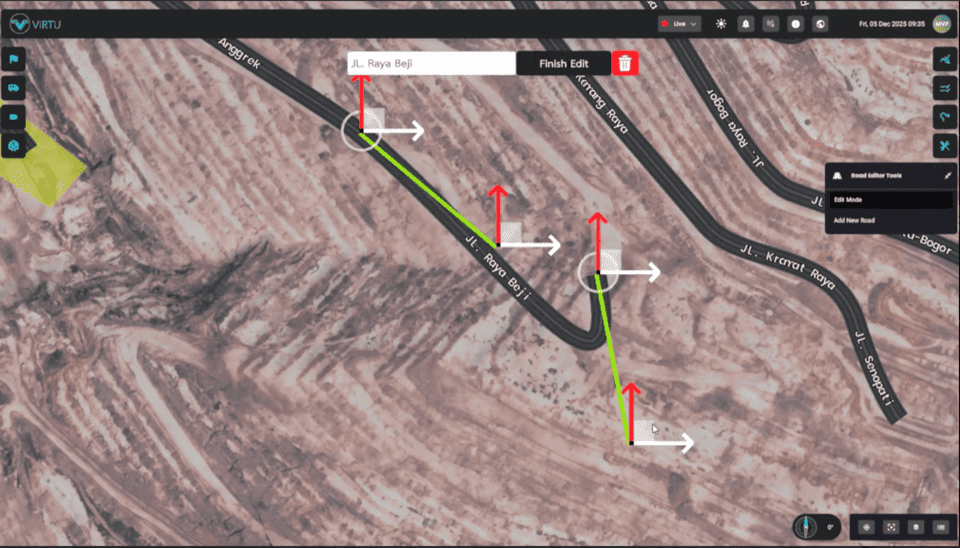
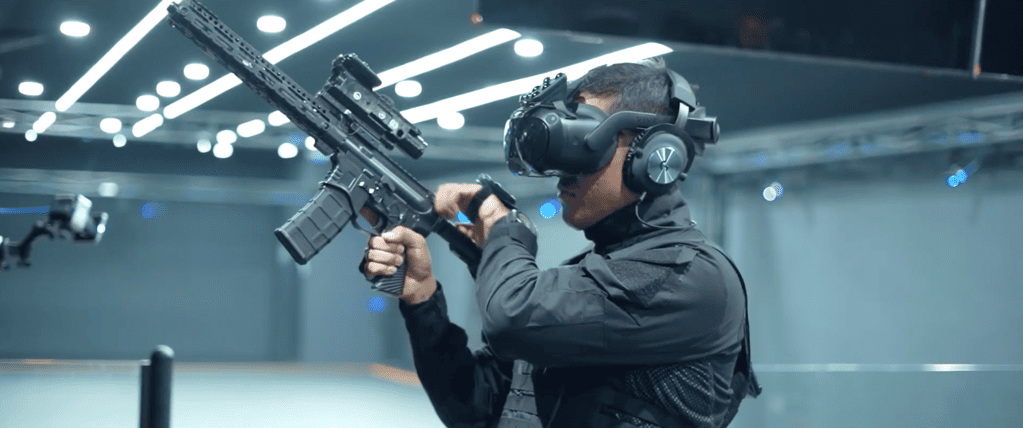
Single Combat covers individual weapons proficiency, marksmanship, and engagement decision-making across service weapons inventory. Trainees develop fundamentals on tracked weapon-form props before live range time.
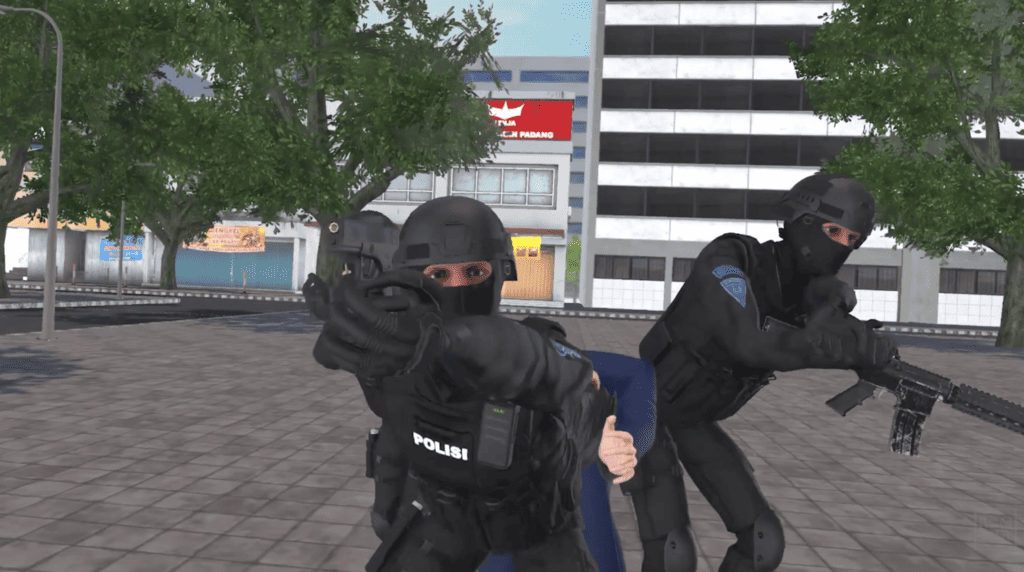
Team Combat covers small unit tactics, room clearing, coordinated movement, and communication under pressure. Squad-level scenarios run in environments matched to actual operational settings.
HALO and HIHO modules cover high-altitude parachute insertion training, including exit sequence, freefall management, canopy deployment, and landing procedures. These scenarios provide extensive rehearsal opportunity for operations that are inherently high-risk in live training.
Vehicular Battle covers armored vehicle crew operations, tactical driving, convoy procedures, and response to vehicular threats. Motion platforms paired with the system simulate vehicle dynamics for realism beyond static trainers.
Command Center covers tactical operations center procedures, situation awareness management, and multi-unit coordination. Senior personnel rehearse command and control scenarios with realistic information flow and decision pressure.
Custom Projects address specific operational requirements outside the standard module set. Mission-specific rehearsals, specialized scenarios, and integration with existing training infrastructure are scoped on a per-project basis.
The platform is built in Indonesia for the operational requirements of defense and security organizations operating in Indonesian and regional contexts. Scenarios reflect locally relevant environments, terrain, equipment, and doctrinal references. Voice prompts and UI default to Bahasa Indonesia, with English available for joint exercises and regional cooperation. Performance data is logged for unit-level review and integrates with existing training records.
For capability briefings, scenario scoping, or pilot deployments, KOMINA can be reached at https://komina.co/ or +62 812 9696 7887.