

There’s a shift happening in defense organizations across Southeast Asia — and it’s not subtle.
Commanders who once relied solely on live-fire exercises and field drills are quietly making room in their training budgets for something new. Something that, just a decade ago, would have sounded like science fiction. Virtual training for military and law enforcement has crossed the threshold from “experimental” to “essential,” and the organizations moving fastest are already pulling ahead.
But why now? What changed?
The honest answer is: everything changed at once.
The Old Way Has Real Limits
Traditional combat training has served defense forces for generations. Nobody’s disputing that. But anyone who has actually organized a live-fire exercise knows what it costs — in money, logistics, time, and occasionally, in injuries.
Ammunition is expensive. Coordinating large-scale field exercises requires weeks of planning. Certain scenarios — hostage extractions in dense urban environments, VVIP protection under active threat — simply cannot be safely replicated in real-world training. You can approximate them. You can brief soldiers on what to do. But you can’t truly put them inside the pressure of the moment without either spending an enormous amount of resources or accepting real risk.
This is the gap that virtual training for military and law enforcement was built to fill.
What KOMINA Actually Brings to the Table
KOMINA, developed by PT Virtu Digital Kusuma and accessible at https://komina.co/, is not a simulator in the old-fashioned sense. It’s not a screen on a stand with a joystick. It’s a full-immersion VR training platform designed from the ground up for defense and security professionals.
The difference matters. A lot.
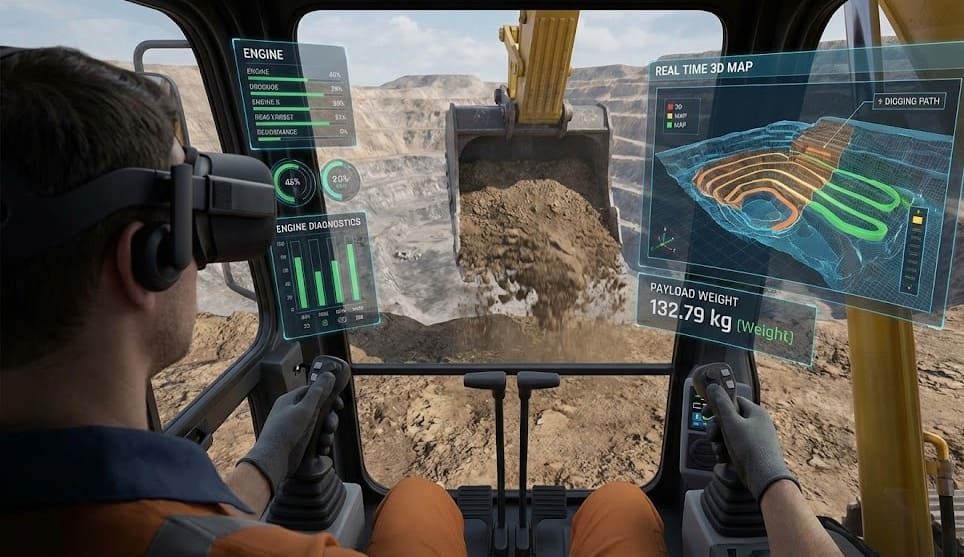
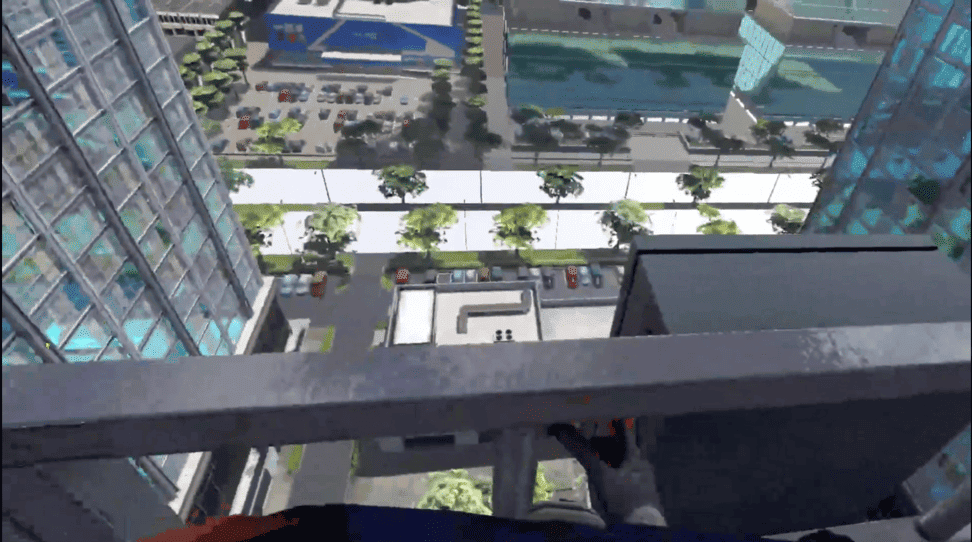
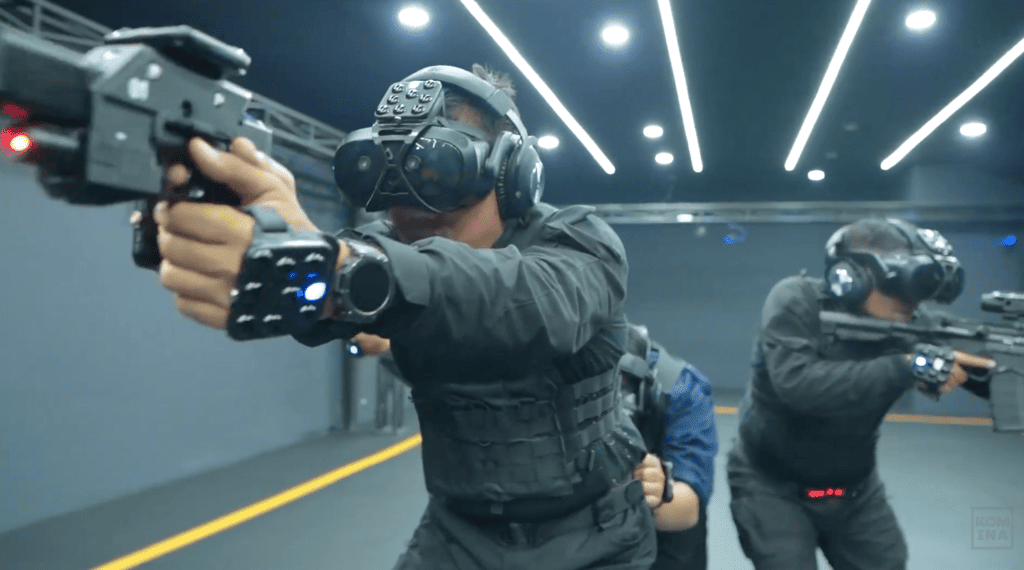
When a trainee steps into a KOMINA session, they’re wearing a haptic vest with over 40 impact zones, carrying a weapon replica that mimics the actual weight distribution and recoil of a real firearm, and moving through a photorealistic environment rendered at 4K per eye with a 120Hz refresh rate. Their heart rate is being monitored in real time. Their stress responses are being analyzed by AI. Every shot, every movement, every decision is captured.
When the session ends, there’s data. Not a vague impression from an instructor who was watching from thirty meters away. Actual data — shot groupings, reaction times, stress curves, tactical positioning, communication efficiency.
That’s what makes this different.
The Numbers Don’t Lie
Organizations that have deployed KOMINA across their training programs report up to 60% reduction in training costs. That’s not a rounding error — that’s a structural change in what it takes to prepare personnel for high-stakes situations.
More than 10,000 personnel have been trained through the platform. More than 50 military units have gone through it. The satisfaction rate sits at 95%.
These aren’t marketing projections. They’re outcomes.
Why This Matters Beyond the Budget
Cost savings are compelling, obviously. But the deeper argument for virtual training for military and law enforcement isn’t about money — it’s about outcomes that live fire simply can’t replicate.
Consider stress inoculation. Studies in military psychology have consistently shown that personnel who have experienced controlled, realistic stress during training perform better under actual operational pressure. The body’s physiological response to danger — elevated heart rate, tunnel vision, degraded fine motor control — can be trained against. But only if the training environment actually triggers those responses.
KOMINA’s Electric Shock Penalty system is designed specifically for this. Controlled electrical stimulation delivers genuine physical feedback when a trainee is “hit” during a scenario. It triggers real adrenaline. Real stress. And therefore real adaptation.
You can’t get that from a PowerPoint briefing.
Looking Forward
The trajectory is clear. Virtual training for military and law enforcement will not replace traditional field exercises entirely — nor should it. But for scenario rehearsal, stress inoculation, performance analysis, and accessible repetition of complex tactical situations, VR platforms like KOMINA represent the most significant leap in training capability in a generation.
The organizations that recognize this early will field more capable, more confident, better-prepared personnel than those still waiting for the technology to “mature.”
It already has.
To learn more about how KOMINA can transform your training program, visit https://komina.co/