ImmersiveTraining

Bisnis, Featured, News

VR or Motion Cabin? Picking a Mining Simulator

For years, “mining simulator” meant one thing: a full-motion cabin. A replica operator’s seat mounted on a hydraulic platform, wrapped in curved screens, that pitches and rolls to mimic a haul truck climbing a ramp. They’re impressive machines, and they’re expensive ones. Lately a second option has crowded into the conversation — the VR headset simulator — and mining companies weighing a purchase are often unsure how the two actually compare. The honest answer is that they’re different tools solving overlapping problems, and the right choice depends on what a particular operation is trying to fix. What the motion platform does well A full-motion cabin’s strength is physical fidelity. When the platform tilts as a virtual truck crests a grade, the operator’s inner ear feels something close to the real sensation. For training the bodily, seat-of-the-pants feel of operating heavy equipment, that physical motion is genuinely valuable, and nothing in a static headset fully replaces it. The trade-offs are equally real. A motion-platform simulator is large, heavy, and effectively immovable — it lives in one room, and operators come to it. It’s costly to buy and to maintain. And each unit typically trains one operator on one equipment type at a time, which makes scaling across a workforce slow and expensive. For a large mine with hundreds of operators spread across remote sites, that footprint is a serious constraint. What the VR headset does well A VR simulator inverts most of those constraints. The hardware is portable — a headset and controllers that travel to site in a case, rather than a room operators must travel to. It’s a fraction of the cost per training station, which means an operation can run many operators in parallel instead of queuing them for one cabin. And a single VR setup can switch between equipment types and scenarios in software — excavator one session, haul truck the next, a hazard drill after that — without any change of hardware. This is the model Indonesian developer Virtu has built its mining training around: a portable VR-based mining simulator that reconstructs cabins, controls, components, and work procedures, and records each session as tracked data. The pitch isn’t that it reproduces the physical jolt of a motion platform — it’s that it makes high-volume, scenario-varied, data-tracked training affordable enough to run across an entire workforce, including at remote sites a motion cabin would never reach. The honest comparison Neither format is simply “better.” A motion platform wins on raw physical sensation and is the stronger choice where the bodily feel of operation is the specific thing being trained, and budget and footprint aren’t constraints. A VR headset wins on cost, portability, scalability, scenario variety, and data — which matters most when the goal is to train many operators on many situations, safely, without halting production or buying real-equipment seat time. A growing number of operations land on a blend: VR for the high-volume fundamentals, procedures, hazard recognition, and the long tail of scenarios, with limited motion-platform or live-equipment time reserved for the final physical polish. Used that way, the two aren’t rivals. The VR stage makes the expensive stage more productive, because operators arrive already fluent in the procedures. How to actually decide The practical question isn’t “which technology is best?” but “what is this operation’s bottleneck?” If the bottleneck is that operators lack the physical feel of the machine, lean toward motion. If the bottleneck is that training is too slow, too costly, too risky, or impossible to deliver to remote sites at scale — which is the more common complaint — VR is the tool built for that problem. Counting the per-operator cost, the number of people who need training, and whether the equipment has to travel to the workforce usually makes the answer clear long before any demo. A mining industry simulator is only as useful as the bottleneck it removes. The first step is naming the bottleneck honestly — then the format chooses itself.

Bisnis, Featured, News

VGLANT VR: The First Four Minutes of Cardiac Arrest Response

The four-minute window between cardiac arrest onset and the beginning of permanent brain injury is the foundation of bystander BLS protocols worldwide. Each minute without chest compressions reduces survival probability by approximately 10%. By the six-minute mark, survival odds decline sharply. Beyond ten minutes without intervention, survival outcomes are limited even when advanced medical care arrives afterward. This time window has direct implications for workplace first aid programs. Ambulance response times in major Indonesian cities — Jakarta, Surabaya, Bekasi, Tangerang — typically exceed the four-minute window. In industrial estates such as Cilegon, Cikarang, and Karawang, response times often extend past 15 minutes once gate clearance and access road conditions are factored in. The operational implication is that the first effective response will come from personnel already on site, not from the emergency medical system. Standard first aid training in Indonesia, delivered through PMI, BNSP-recognized providers, or Kemnaker-aligned programs, covers the necessary procedural content. The limitation is not the curriculum. It is the absence of practice conditions that resemble the physiological and cognitive environment of an actual emergency response. How Acute Stress Affects Procedural Performance Under acute stress, several measurable cognitive changes occur. Working memory capacity narrows. Attention focuses selectively, often on a single stimulus. Complex procedural sequences become harder to retrieve in full. What remains accessible is procedural memory that has been automated through repetition rather than learned through a single exposure. This pattern is documented in research on military, emergency medical, and law enforcement performance under stress. The consistent finding is that performance during a crisis reflects the conditions under which the skills were practiced. Skills rehearsed under calm conditions tend to degrade under operational stress. Skills rehearsed under conditions resembling the operational environment retain more reliably. Classroom manikin practice does not reproduce the physiological state of an actual emergency. Participants know the manikin is not a real victim, the scene is not active, and there is no consequence attached to a delayed or incorrect action. The stress response that accompanies real cardiac arrest events does not engage during the training. What Changes in an Immersive Training Environment VR-based first aid training engages a partial stress response that classroom training does not produce. The headset displays a collapsed victim, ambient audio reflects the location, and a timer runs in real time. Trainees know the scene is simulated. The brain processes the visual and auditory input as partially real, which engages baseline physiological responses including elevated heart rate, narrowed attention, and time pressure on decision-making. This is closer to the cognitive condition in which procedural skills need to be retrievable. Training under this condition produces skill retention that aligns more closely with operational performance than classroom-only training does. The practical effect is the difference between recalling a procedure and executing it under pressure. Participants practice the full sequence — scene check, responsiveness assessment, calling for emergency services, compression initiation, AED retrieval — while also managing the hesitation, task delegation, and information processing that occur in a real response. Scenarios That Are Difficult to Practice in Conventional Training Cardiac arrest in a meeting room. This scenario combines BLS initiation with bystander management. The responder must delegate a specific person to call emergency services, another to retrieve the AED, and begin compressions within the first two minutes. Standard manikin training does not reproduce the social and communicative complexity of multiple untrained bystanders. Choking in a cafeteria or break room. Choking response requires recognition of the choking sign, a decision between back blows and abdominal thrusts, and intervention before loss of consciousness. The victim is typically unable to speak and may move away from the scene before being assessed. These behavioral elements are difficult to reproduce with a static manikin. Head injury with reduced consciousness. This scenario requires monitoring rather than immediate intervention. The responder needs to maintain a clear airway, monitor breathing, avoid unnecessary spinal movement, and prepare information for emergency medical personnel. The judgment component — when to act and when to hold position — is difficult to drill in conventional training formats. Where VR Fits Within First Aid Certification First aid certification in Indonesia requires hands-on practice with a qualified instructor. This applies whether certification is issued by PMI, Kemnaker, or an international body. VR does not satisfy this requirement and is not positioned as a replacement. VR provides supplementary practice between certification cycles. The operational model used by organizations adopting this approach typically follows the same pattern: employees complete formal certification through the accredited pathway, then run periodic VR sessions to maintain skill retention during the interval between certifications. Research on resuscitation skill retention indicates that procedural skills, particularly compression depth and rate, begin to decay within three to six months without practice. Annual or biennial recertification is the regulatory baseline, but does not fully address this decay curve. The model is most relevant for workplaces with elevated response time risk. Remote construction sites, offshore oil and gas platforms, mining operations, and industrial estates with extended ambulance access times share the same operational condition: the first effective response will come from on-site personnel, and the quality of that response is shaped by practice frequency rather than certification status alone. Closing Workplace first aid programs are usually evaluated against certification status. A more useful evaluation question is whether trained personnel would perform the correct sequence within the first four minutes of an actual cardiac arrest event. Certification alone does not produce this capability. Practice frequency is the relevant variable. VR-based training is one method for increasing practice frequency at a manageable cost per session. It does not replace certification, hands-on manikin practice, or accredited instruction. It addresses the gap between certification cycles, which is the part of the training lifecycle where conventional methods are structurally limited by cost and scheduling. VGLANT develops VR-based safety training for Indonesian workplaces, including first aid scenarios, fire response, APAR operation, hazardous material handling, and confined space training. The platform supports Bahasa Indonesia and English, runs on standard VR hardware, and aligns with AHA

Bisnis, Featured, News

Live or Virtual Training? A Decision Framework for Defense Procurement

The procurement question that defense and security organizations actually face isn’t whether VR works. That’s been settled by a decade of deployment evidence across multiple national militaries and police forces. The real question is more specific and harder. Given a fixed training budget, a finite calendar, and operational outcomes that need to be reached — how should the mix between live and virtual training actually get set? Most decision tools in this space don’t help much. Vendor frameworks favor whoever made the framework. Generic comparison matrices treat all training categories equally when the actual procurement decisions are category-specific. Cost-benefit analyses run on assumptions that often don’t hold for the specific organization doing the procurement. This piece walks through a different approach. Three operational dimensions that determine training value. How VR and conventional training each score across those dimensions. A decision framework for combining them based on what the organization actually needs to accomplish. What “better training” actually means Before comparing methods, it helps to be specific about what training is supposed to produce. Vague goals produce vague procurement decisions. Operational goals produce evaluable ones. Training produces three things that matter operationally. First, personnel who can execute specific tasks reliably under operational conditions. Marksmanship that holds up at distance, under stress, with the right weapons. Procedural sequences that run correctly when cognitive load is high. Decision-making that lands within rules of engagement when the situation is ambiguous. Without these capabilities, the training didn’t deliver, regardless of what the syllabus says. Second, retention of capability across the gap between training and operations. Skills decay. The gap between when training happened and when capability is needed determines whether the skills survive. Annual refresher cycles aren’t enough for high-stakes capabilities. Daily practice isn’t operationally feasible. Something in between is what actually works, and the cost of running that “something in between” is what most procurement decisions actually turn on. Third, documented competency that satisfies accountability requirements. Modern defense and law enforcement training doesn’t just need to produce capability. It needs to produce evidence of capability — performance records, competency documentation, audit trails that survive review. Training that builds skills without producing documentation creates compliance risk regardless of how good the training was. A training method that scores well on these three dimensions is doing its job. A method that scores poorly on any one of them is failing operationally even if it scores well on the others. The comparison below evaluates VR and conventional training across these three dimensions, then synthesizes the trade-offs. Dimension 1: Capability production Conventional training produces capability that translates directly to operations. There’s no controversy about this. Decades of operational data confirm what every defense organization already knows — accredited live-fire programs, field exercises, and tactical drills produce personnel who perform competently in real operations. Anyone arguing otherwise isn’t worth taking seriously. The interesting question isn’t whether conventional training works. It’s whether conventional training produces the full capability range that operations actually require, given the constraints that limit how often the most realistic scenarios can be run. The answer is qualified. Conventional training is strongest where physical realism is essential — handling actual weapons, operating actual vehicles, executing actual physical maneuvers under actual environmental conditions. The skills built this way transfer directly because the training conditions match the operational conditions. No simulation reproduces this completely, and any honest assessment acknowledges the gap. VR is strongest where realistic conditions can’t be staged often enough. Decision-making under cognitive load. Procedural drilling at high frequency. Scenario variety beyond what physical facilities support. Pattern recognition across diverse threat configurations. Published research on weapons familiarization and tactical decision-making in immersive environments consistently reports positive transfer when scenario design is sound. The gap between VR training conditions and operational conditions is real, but it’s smaller than the gap between annual-refresh conventional training conditions and operational conditions when the operational task is decision-making rather than physical execution. This split is the operational reality. Tactile and field-condition capabilities favor conventional training. Procedural, decision-making, and pattern-recognition capabilities favor VR. The split isn’t aesthetic. It reflects what each method actually does well. Where most procurement decisions go wrong is treating capability production as a single category. Defense and security work involves many capability categories. Some favor conventional methods clearly. Others favor VR clearly. The procurement question is which capabilities the organization needs most, not which method is generally better. Dimension 2: Total cost of capability Cost analysis between training methods typically gets framed as a simple comparison of per-unit prices. That framing misses what actually matters operationally. The relevant question is cost per unit of capability produced, including all the costs and including the full operational time horizon. Conventional training has cost structure that scales with use. Ammunition consumed per session. Fuel burned per exercise. Vehicle wear per training cycle. Facility utilization per training event. Instructor hours per trainee. Personnel opportunity cost when operators get pulled from operations to instruct. Each of these scales as training volume scales, which means the total cost rises proportionally with training frequency and trainee count. VR has cost structure that concentrates at deployment, then runs cheap. Headsets, controllers, weapon-form props, motion platforms, and supporting infrastructure represent capital expenditure that gets paid once. Software licensing and content development add ongoing costs. Instructor time is still required, but at lower per-session ratios. The marginal cost of running an additional VR session after deployment approaches zero — software is licensed, instructor time is minimal, no consumables get burned. The breakeven math depends on organization size and training frequency. For organizations training small populations at low frequency, conventional methods are often cheaper in absolute terms because the VR hardware investment isn’t justified by the volume. For organizations training large populations at high frequency, or running multi-site operations, or wanting to refresh capabilities more often than annual cycles support, VR breakeven typically lands within one to three years. This is where the procurement decision usually turns. Not on whether VR is cheaper or more expensive in some abstract

Bisnis, Featured, News

Why Virtual Training for Military and Law Enforcement Is No Longer Optional

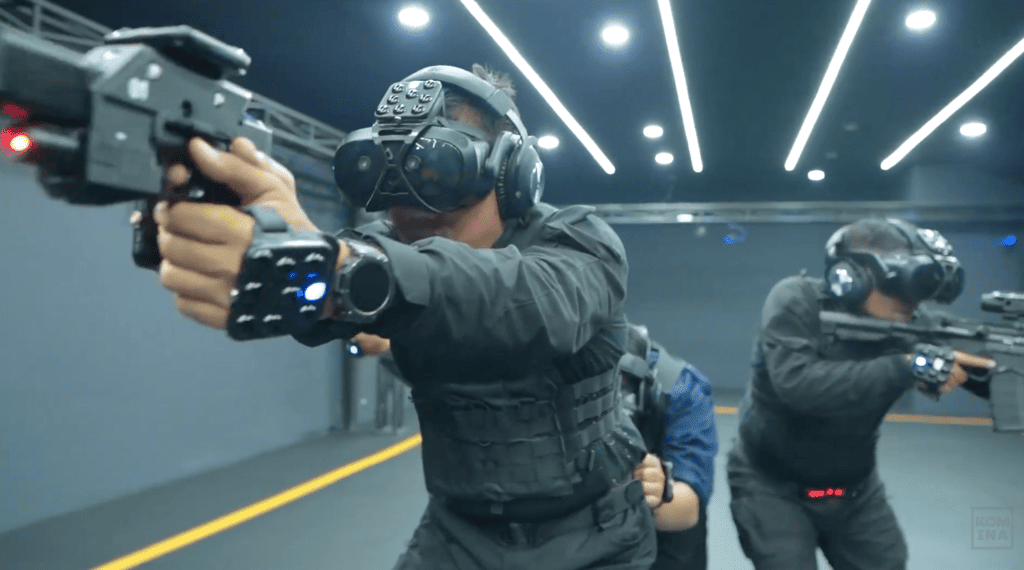
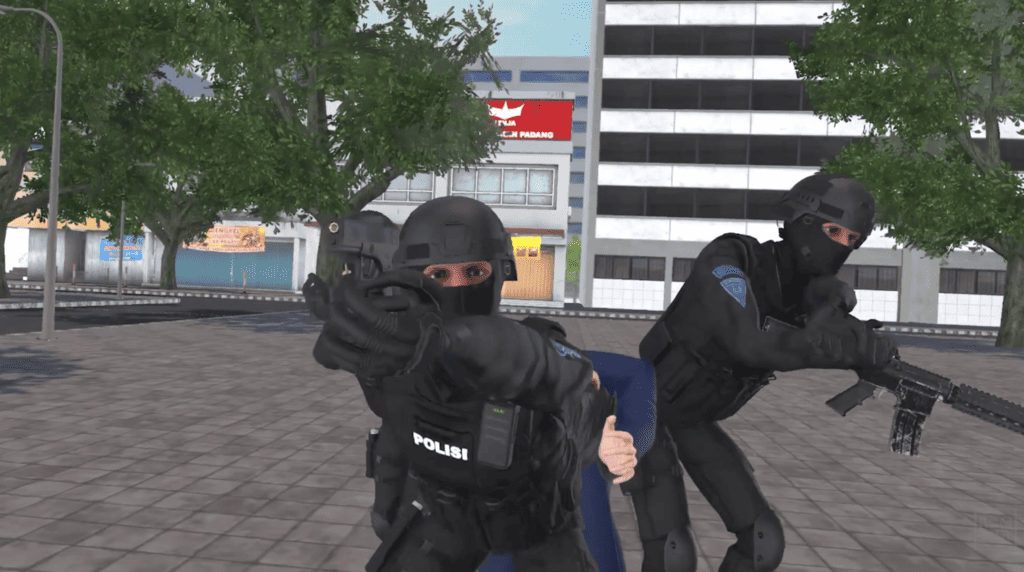
There’s a shift happening in defense organizations across Southeast Asia — and it’s not subtle. Commanders who once relied solely on live-fire exercises and field drills are quietly making room in their training budgets for something new. Something that, just a decade ago, would have sounded like science fiction. Virtual training for military and law enforcement has crossed the threshold from “experimental” to “essential,” and the organizations moving fastest are already pulling ahead. But why now? What changed? The honest answer is: everything changed at once. The Old Way Has Real Limits Traditional combat training has served defense forces for generations. Nobody’s disputing that. But anyone who has actually organized a live-fire exercise knows what it costs — in money, logistics, time, and occasionally, in injuries. Ammunition is expensive. Coordinating large-scale field exercises requires weeks of planning. Certain scenarios — hostage extractions in dense urban environments, VVIP protection under active threat — simply cannot be safely replicated in real-world training. You can approximate them. You can brief soldiers on what to do. But you can’t truly put them inside the pressure of the moment without either spending an enormous amount of resources or accepting real risk. This is the gap that virtual training for military and law enforcement was built to fill. What KOMINA Actually Brings to the Table KOMINA, developed by PT Virtu Digital Kusuma and accessible at https://komina.co/, is not a simulator in the old-fashioned sense. It’s not a screen on a stand with a joystick. It’s a full-immersion VR training platform designed from the ground up for defense and security professionals. The difference matters. A lot. When a trainee steps into a KOMINA session, they’re wearing a haptic vest with over 40 impact zones, carrying a weapon replica that mimics the actual weight distribution and recoil of a real firearm, and moving through a photorealistic environment rendered at 4K per eye with a 120Hz refresh rate. Their heart rate is being monitored in real time. Their stress responses are being analyzed by AI. Every shot, every movement, every decision is captured. When the session ends, there’s data. Not a vague impression from an instructor who was watching from thirty meters away. Actual data — shot groupings, reaction times, stress curves, tactical positioning, communication efficiency. That’s what makes this different. The Numbers Don’t Lie Organizations that have deployed KOMINA across their training programs report up to 60% reduction in training costs. That’s not a rounding error — that’s a structural change in what it takes to prepare personnel for high-stakes situations. More than 10,000 personnel have been trained through the platform. More than 50 military units have gone through it. The satisfaction rate sits at 95%. These aren’t marketing projections. They’re outcomes. Why This Matters Beyond the Budget Cost savings are compelling, obviously. But the deeper argument for virtual training for military and law enforcement isn’t about money — it’s about outcomes that live fire simply can’t replicate. Consider stress inoculation. Studies in military psychology have consistently shown that personnel who have experienced controlled, realistic stress during training perform better under actual operational pressure. The body’s physiological response to danger — elevated heart rate, tunnel vision, degraded fine motor control — can be trained against. But only if the training environment actually triggers those responses. KOMINA’s Electric Shock Penalty system is designed specifically for this. Controlled electrical stimulation delivers genuine physical feedback when a trainee is “hit” during a scenario. It triggers real adrenaline. Real stress. And therefore real adaptation. You can’t get that from a PowerPoint briefing. Looking Forward The trajectory is clear. Virtual training for military and law enforcement will not replace traditional field exercises entirely — nor should it. But for scenario rehearsal, stress inoculation, performance analysis, and accessible repetition of complex tactical situations, VR platforms like KOMINA represent the most significant leap in training capability in a generation. The organizations that recognize this early will field more capable, more confident, better-prepared personnel than those still waiting for the technology to “mature.” It already has. To learn more about how KOMINA can transform your training program, visit https://komina.co/

Scroll to Top